
Self-Compassion Summer (Part 2)
June 18, 2026
Ahhhhh, summer! The hills are alive with the sounds of pools and sprinklers and lawn mowers…and no students! Maybe this brings a smile to your face or maybe you find yourself missing the routine of the school year. Either way, we’re here to bring you another dose of The Character Effect to help you build a more self-compassionate summer.
Last month, we shared research from Dr. Neff—here is an overview from graphic recorder Johnine Byrne: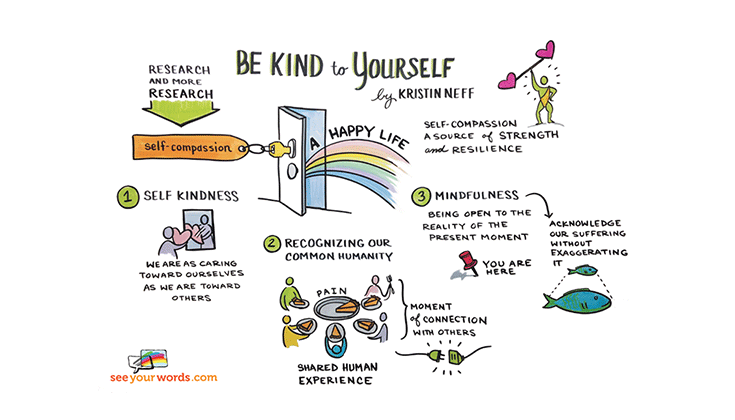
This month, we’re building on that foundation by connecting self-compassion to the PERMAH framework for wellbeing.
PERMAH reminds us that caring for ourselves isn’t just one thing, it’s a combination of many experiences that help us thrive:
P: Positive Emotions (experiencing positive feelings like joy, gratitude, and serenity)
E: Engagement (being deeply involved and absorbed in activities)
R: Relationships (having meaningful, supportive connections with others)
M: Meaning (believing that one’s life is valuable and purposeful)
A: Accomplishment (pursuing and achieving goals for their own sake)
H: Health (maintaining physical wellness and vitality)
Since focusing on too much at once can be cause for overwhelm, we will explore the first three pillars of PERMAH this month and be back in July for the last three.
1. Positive Emotions: The Character Strengths of Gratitude and Hope overlap with this first pillar of the PERMAH framework, as both have been shown to have positive impacts on our mental and physical health. When we cultivate moments of Gratitude and Hope in our daily lives, we can actually increase our wellbeing and boost our capacity to handle adversity. TRY IT! When things aren’t going your way, pause and ask: Where could Gratitude or Hope fit into this moment? This won’t erase the difficulty you’re facing, but these strengths can expand your perspective and reconnect you to common humanity, a key driver of self-compassion.
2. Engagement: When was the last time you were so absorbed in an activity or moment that you lost track of time? What are the things you do that result in feeling so caught up in the flow that you couldn’t tell how long you’d been there? These are ways to recognize the places where you feel the most engaged, and where you are more likely to enter into a flow state. Being in flow is a way of being mindful and remaining open to what the present moment has to offer. TRY IT! Block time to explore different activities or hobbies, even small ones.
Afterward, reflect: Which activities pulled me into flow? How did I feel afterward?
Moments of engagement can strengthen your sense of competence and overall wellbeing.
3. Relationships: The School of Positive Psychology tells us that High-Quality Connections (HQCs) result in increased psychological resilience, better physical health, lower stress levels, improved immune function, and a reduced risk of chronic diseases. HQCs are fostered through showing genuine interest and value in another person, helping others succeed in their work, openness and reliability, and light-hearted, playful interactions.
TRY IT! Choose a relationship to pour into more intentionally this week, with a strategy or two from above. Chances are, that intentional presence will make you feel more supported, too. Drop by next month for our dive into Meaning, Accomplishment, and Health. In the meantime, remember: taking time for yourself is self-compassion in action. What’s one small way you’ll care for yourself this week?
Whatever you choose, you’ve got this!

 Contact